
Ever been in a chat where someone replies with idts and you just sit there like wait what
You’re not alone. Internet slang moves fast and missing even one abbreviation can leave you confused. But don’t worry by the end of this guide you’ll not only understand idts meaning but you’ll also know exactly when how and why to use it like a pro.
Let’s break it down in the simplest way possible 👇
What Does “IDTS” Mean?
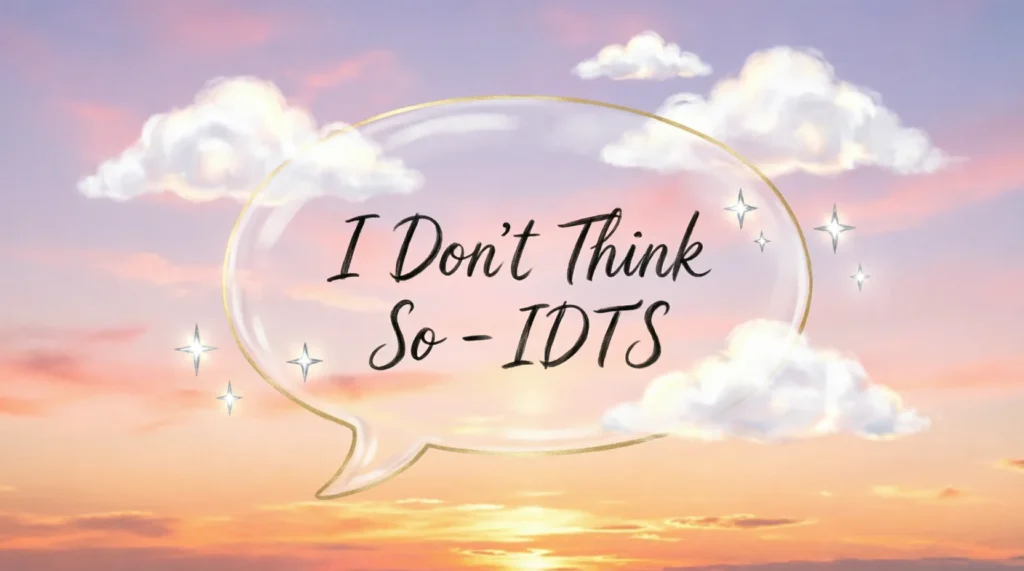
IDTS stands for:
👉 “I don’t think so.”
It’s a casual, shortened way of expressing disagreement, doubt, or uncertainty in conversations—especially online or in texting.
Simple Meaning (In Plain English)
If someone says “idts”, they’re basically saying:
- ❌ “No, I don’t agree”
- 🤷 “I’m not sure about that”
- 🙅 “That’s probably not true”
It’s not always harsh—it depends on tone—but generally, it’s a soft way of saying “no.”
Where Is “IDTS” Used?
You’ll mostly see idts in informal, fast-paced communication like:
- 📱 Text messages
- 💬 Chat apps (WhatsApp, Messenger, Telegram)
- 🐦 Social media comments (Twitter/X, Instagram, TikTok)
- 🎮 Online gaming chats
- 🧑🤝🧑 Group chats with friends
It’s rarely used in:
- ❌ Professional emails
- ❌ Academic writing
- ❌ Formal conversations
👉 Think of it as street-language for the internet—quick, casual, and expressive.
Why Do People Use “IDTS”?
Good question—and the answer is pretty simple.
People use idts because it’s:
- ⚡ Fast – saves time typing
- 💬 Casual – fits relaxed conversations
- 😌 Less confrontational – softer than saying “No” directly
- 📲 Trendy – part of modern digital slang
In a world where everyone types quickly, abbreviations like this just make communication easier.
Real-Life Examples (With Meaning)
Let’s look at how idts actually shows up in conversations:
Example 1:
Friend: “Do you think it’ll rain today?”
You: “idts”
👉 Meaning: I don’t think it will rain.
Example 2:
Someone: “He’s going to win for sure.”
You: “idts tbh”
👉 Meaning: I don’t think so, to be honest.
Example 3:
Friend: “Should I message them again?”
You: “idts, give it some time”
👉 Meaning: No, I don’t think you should.
Example 4:
Chat: “Is this the right answer?”
Reply: “idts 😅”
👉 Meaning: I don’t think it’s correct (but in a light tone).
IDTS vs Similar Terms (Quick Comparison)
Here’s how idts compares to other common slang:
| Term | Meaning | Tone | Usage |
|---|---|---|---|
| IDTS | I don’t think so | Neutral / soft | Casual chats |
| IMO | In my opinion | Neutral | Sharing thoughts |
| TBH | To be honest | Honest / direct | Giving truth |
| NGL | Not gonna lie | Casual honesty | Opinions |
| NOPE | Strong no | Blunt | Direct refusal |
👉 Key difference:
IDTS is more polite and uncertain, while words like “nope” are more direct.
When Should You Use “IDTS”?
Use idts when you want to:
- ✔️ Disagree politely
- ✔️ Express doubt
- ✔️ Keep things casual
- ✔️ Avoid sounding too harsh
Good situations:
- Chatting with friends
- Replying casually online
- Light disagreements
Avoid using it when:
- ⚠️ Talking to your boss
- ⚠️ Writing formal messages
- ⚠️ Situations needing clarity
👉 In formal cases, just say:
“I don’t think so” instead.
Common Misunderstandings
Even though idts is simple, people often get it wrong.
❌ Misunderstanding #1: It means “I don’t know”
Nope. That would be “idk.”
❌ Misunderstanding #2: It’s rude
Not necessarily.
👉 It depends on tone.
Add emojis or context, and it becomes friendly.
❌ Misunderstanding #3: It’s always serious
Sometimes it’s used jokingly or sarcastically.
Example:
“You’re going to wake up at 5am tomorrow?”
“idts 😂”
👉 That’s playful, not serious.
Pro Tips for Using “IDTS” Like a Native Speaker 💡
Want to sound natural? Follow these tips:
- ✅ Add tone with emojis
→ “idts 🙂” feels softer than just “idts” - ✅ Pair it with explanation
→ “idts, it looks risky” - ✅ Use it in friendly chats only
→ Keeps your communication appropriate - ⚠️ Avoid overusing it
→ Too much slang can feel lazy or unclear - ✅ Match the vibe of the conversation
→ If others are formal, skip slang
FAQ Section:
1. What does IDTS mean in texting?
IDTS means “I don’t think so.” It’s used to express doubt or disagreement casually.
2. Is IDTS rude?
Not usually. It’s generally polite and soft, especially when used with emojis or friendly tone.
3. What’s the difference between IDTS and IDK?
- IDTS = I don’t think so
- IDK = I don’t know
👉 One shows doubt, the other shows lack of knowledge.
4. Can I use IDTS in professional messages?
No. It’s best to avoid slang in formal settings. Use “I don’t think so” instead.
Final Thoughts:
At its core idts meaning is simple but how you use it makes all the difference.
It’s more than just an abbreviation It’s a social tool that helps you:
- Express disagreement politely
- Keep conversations relaxed
- Communicate quickly in digital spaces
Once you start noticing it you’ll see idts everywhere and now you’ll always know exactly what it means 😉
