
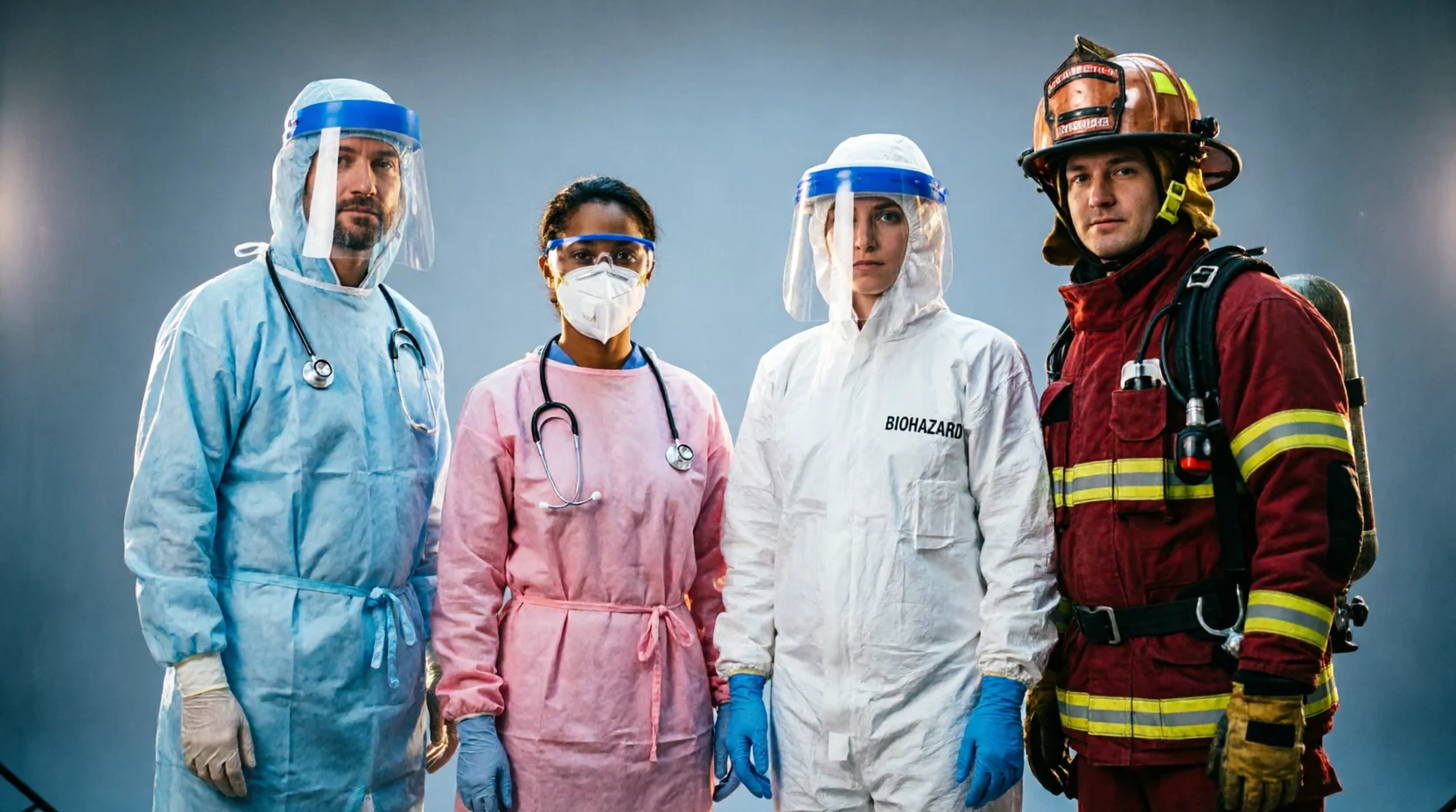
Have you ever seen the term PPE on a sign in a workplace, or even in the news and wondered what it actually means?
You’re not alone.
This simple three-letter abbreviation carries serious importance especially when it comes to safety health, and protection. Whether you’re working in a factory hospital or even doing DIY at home understanding PPE could literally protect your life.
Let’s break it down in the simplest way possible 👇
🧠 What Does PPE Stands For?
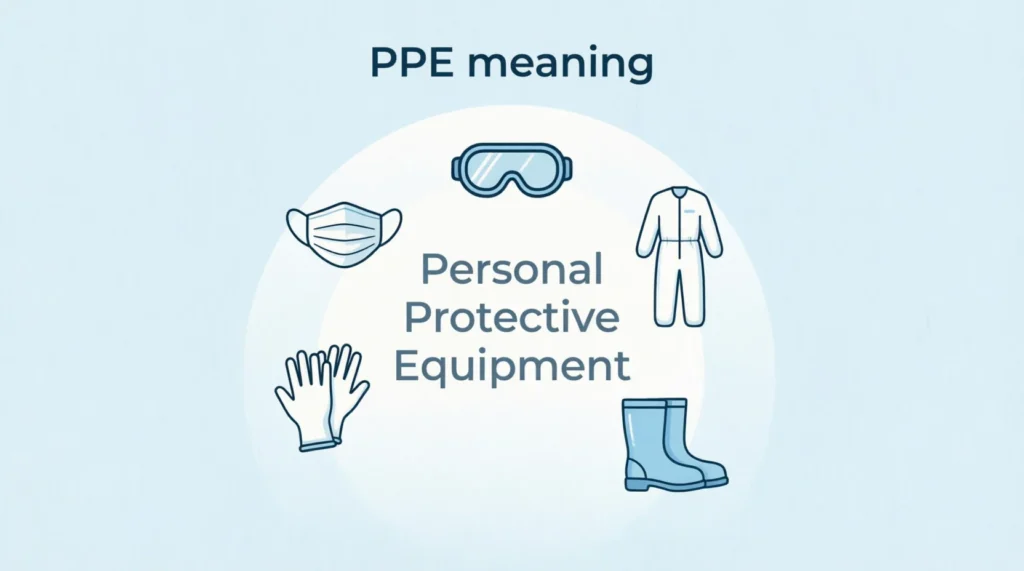
PPE stands for Personal Protective Equipment.
👉 Featured Snippet Definition:
PPE (Personal Protective Equipment) refers to specialized clothing or gear designed to protect you from hazards like injury, infection, or exposure to dangerous materials.
💡 Simple Meaning (In Easy Words)
Think of PPE as your personal shield 🛡️
It’s anything you wear or use to keep yourself safe from harm.
Examples include:
- Helmets ⛑️
- Gloves 🧤
- Masks 😷
- Safety glasses 👓
- Protective clothing 🦺
👉 In simple terms:
PPE = Gear that protects YOU from danger
🌍 Where Is PPE Used?
PPE isn’t limited to just one place—it’s used almost everywhere safety matters.
🏥 Healthcare Settings
Doctors and nurses wear PPE to:
- Avoid infections
- Protect patients
- Handle medical procedures safely
🏗️ Construction Sites
Workers use PPE to:
- Prevent injuries
- Avoid falling objects
- Stay visible in risky environments
🧪 Laboratories
Scientists wear PPE to:
- Handle chemicals safely
- Avoid contamination
🏠 Everyday Life
Yes—even you use PPE sometimes:
- Face masks during illness 😷
- Gloves while cleaning 🧤
- Helmets while riding a bike 🚴♂️
🤔 Why Do People Use PPE?
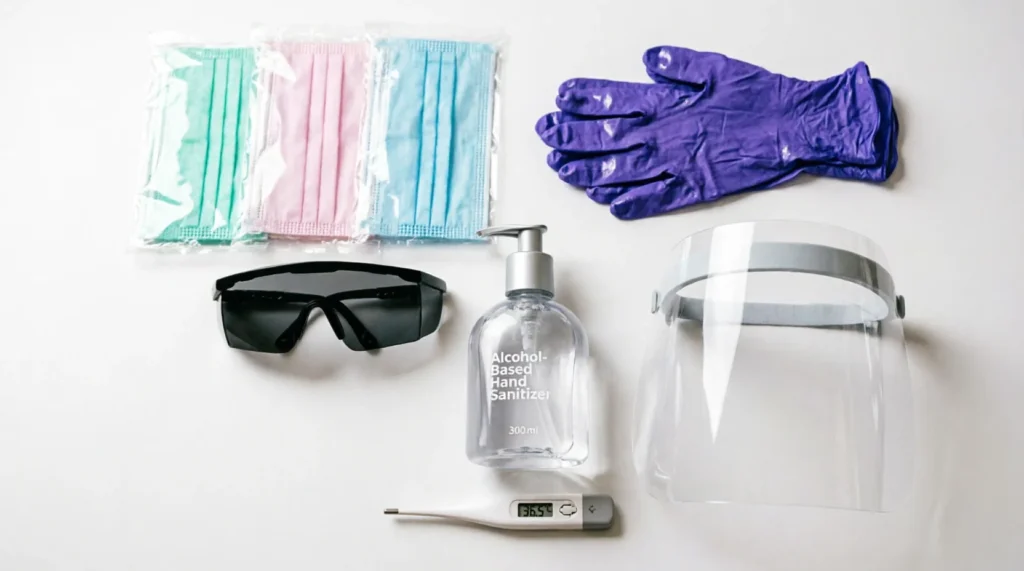
The main reason is simple:
👉 Protection
But let’s go deeper 👇
✅ Key Reasons:
- Prevents injuries (cuts, burns, impacts)
- Reduces risk of infection
- Keeps workplaces safe
- Required by law in many industries
- Builds confidence while working
Without PPE, even a small mistake can turn into a serious accident ⚠️
📌 Real-Life Examples of PPE
Let’s make this practical.
Example 1: Hospital Worker
A nurse wears:
- Mask 😷
- Gloves 🧤
- Face shield
👉 Why? To prevent spreading germs.
Example 2: Construction Worker
A builder uses:
- Helmet ⛑️
- Safety boots 👢
- Reflective jacket 🦺
👉 Why? To avoid injuries from tools or falling objects.
Example 3: Cleaning at Home
You use:
- Gloves 🧤
👉 Why? To protect your skin from chemicals.
🔄 PPE vs Similar Terms
Here’s where many people get confused. Let’s clear it up 👇
| Term | Meaning | Key Difference |
|---|---|---|
| PPE | Personal Protective Equipment | Worn for safety |
| Uniform | Standard clothing | Not always protective |
| Safety Gear | General term | PPE is a specific type |
| Workwear | Clothes for work | May not protect from hazards |
👉 Important:
All PPE is safety gear, but not all safety gear is PPE.
⏰ When Should You Use PPE?
You should use PPE whenever there is any risk involved.
✔️ Use PPE when:
- Working with tools 🔧
- Handling chemicals 🧪
- Treating patients 🏥
- Entering hazardous areas ⚠️
- Doing risky home tasks
👉 Rule of thumb:
If there’s danger, wear PPE.
⚠️ Common Misunderstandings About PPE
Many people think they understand PPE—but make these mistakes:
❌ “PPE is only for professionals”
👉 Wrong. Even everyday people use it.
❌ “It’s optional”
👉 In many jobs, it’s mandatory by law.
❌ “Any gear is PPE”
👉 Not true. It must be designed for protection.
❌ “It guarantees full safety”
👉 PPE reduces risk—but doesn’t eliminate it completely.
💡 Pro Tips (Must-Know Advice)
Want to use PPE the right way? Follow these tips:
🔥 1. Always Choose the Right Type
Not all PPE fits every situation.
🔥 2. Check Quality
Cheap or damaged PPE can fail when you need it most.
🔥 3. Wear It Properly
Even the best gear won’t help if used incorrectly.
🔥 4. Replace When Needed
Old or worn-out PPE = less protection
🔥 5. Don’t Ignore Comfort
If it’s uncomfortable, you might stop using it—choose wisely.
❓ FAQ Section
1. What does PPE stand for in healthcare?
PPE stands for Personal Protective Equipment, used to protect both patients and healthcare workers from infections.
2. Is PPE required by law?
Yes, in many industries like construction and healthcare, PPE is legally required for safety.
3. What are the main types of PPE?
- Head protection (helmets)
- Hand protection (gloves)
- Eye protection (goggles)
- Respiratory protection (masks)
- Body protection (protective clothing)
4. Can PPE completely prevent accidents?
No. PPE reduces risk, but safe practices are also important.
🧾 Final Thoughts:
So, now you know:
👉 PPE stands for Personal Protective Equipment
👉 It’s your first line of defense against danger
👉 It’s used in workplaces hospitals and daily life
In today’s world, safety isn’t optional it’s essential.
And sometimes something as simple as wearing gloves or a helmet can make the difference between safety and serious harm.
