
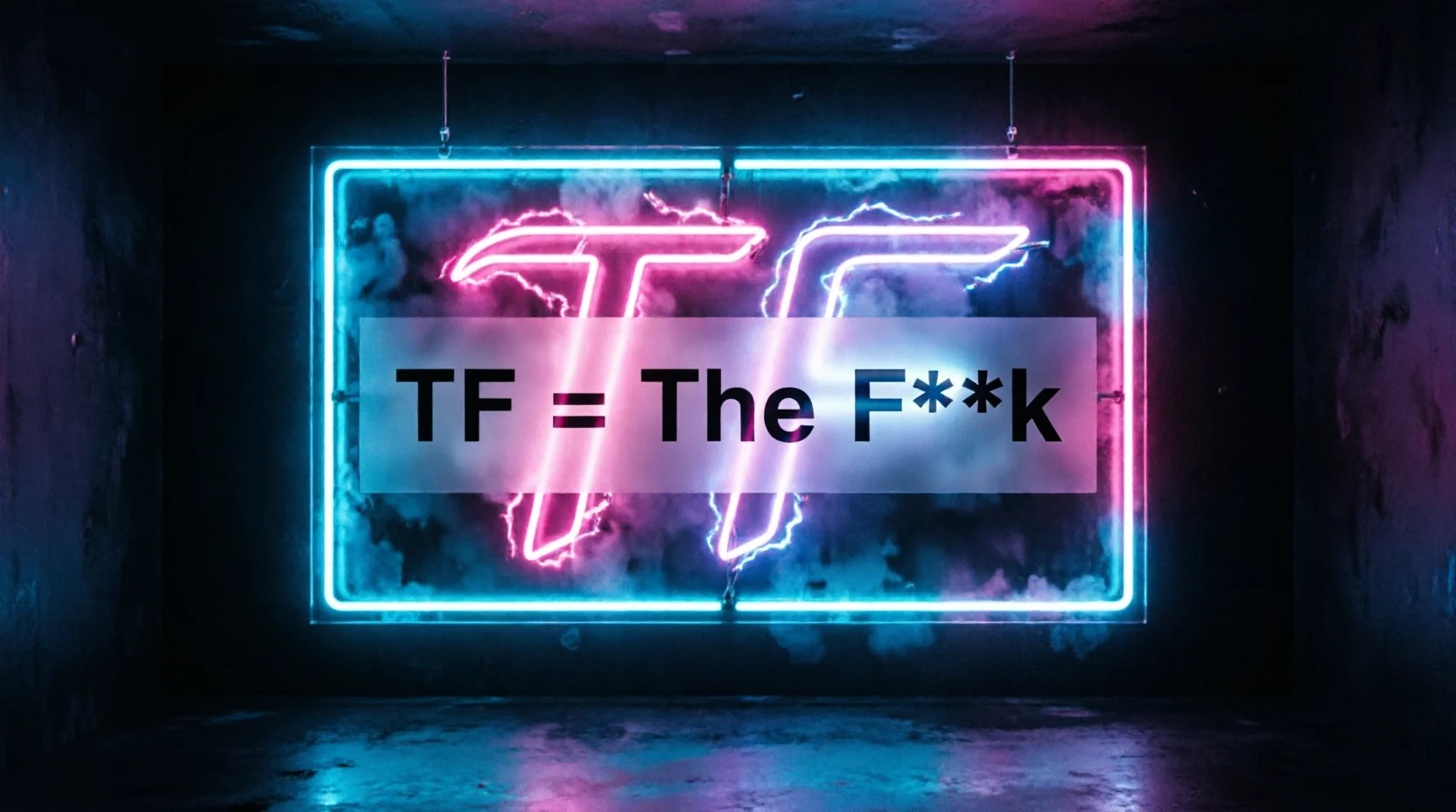
Have you ever received a message that simply said TF? and wondered what it actually meant?
You’re not alone.
Whether you’re scrolling through social media chatting with friends reading comments or browsing memes, you’ve probably seen TF pop up everywhere. Sometimes it looks harmless, while other times it can seem aggressive or confusing.
The truth is that TF meaning can change depending on the context, which is why many people misunderstand it.
In this guide, you’ll learn exactly what TF means, where people use it, why it’s so popular, and how to use it correctly without embarrassing yourself online. 🔥
What Does TF Mean?

TF is a popular internet abbreviation that most commonly stands for:
“The F*”**
It is usually used to express:
- Surprise
- Confusion
- Frustration
- Disbelief
- Shock
Quick Definition
TF meaning: An internet slang abbreviation for “The F***,” used to add emphasis to a question, statement, or reaction.
Examples:
- “What TF happened here?”
- “Where TF are you?”
- “How TF did you do that?”
In these examples, TF adds emotion and intensity to the sentence.
Simple Meaning of TF
In simple words, TF is a shortcut people use when they are strongly reacting to something.
Think of it as an emotional amplifier.
Instead of saying:
“What happened?”
Someone might say:
“What TF happened?”
The second version shows stronger surprise or confusion.
You can think of TF as a way to make your reaction sound more dramatic, emotional, or expressive.
Where Is TF Used?
TF is extremely common across the internet.
Social Media
You’ll often see TF on:
- X (Twitter)
- TikTok
- Snapchat
- Threads
Example:
“TF is going on in this video? 😂”
Text Messages
Friends frequently use TF in casual conversations.
Example:
“TF are you doing awake at 3 AM?”
Gaming Communities
Gamers often use TF during surprising moments.
Example:
“TF was that move?”
Online Forums
Communities on discussion platforms regularly use TF when reacting to unusual situations.
Example:
“TF happened to this update?”
Meme Culture
Memes often rely on exaggerated reactions, making TF a perfect fit.
Example:
“Me waking up and seeing 500 unread emails: TF?!”
Why Do People Use TF?
There are several reasons why TF has become so popular.
1. It Expresses Emotion Quickly
Online communication is fast.
Instead of typing a longer reaction, people use TF to instantly show emotion.
2. It Adds Emphasis
TF makes questions and statements feel stronger.
Compare:
- “Why are you here?”
- “Why TF are you here?”
The second sentence clearly sounds more intense.
3. It Fits Internet Culture
Internet slang often focuses on short, memorable expressions.
TF is quick, recognizable, and easy to type.
4. It Creates Humor
Many people use TF jokingly rather than aggressively.
Example:
“TF is my cat staring at? 😅”
Real-Life Examples of TF
Let’s look at some common examples and what they actually mean.
Example 1
Message:
“TF is this?”
Meaning:
The person is confused or surprised by what they’re seeing.
Example 2
Message:
“How TF did you finish that so fast?”
Meaning:
The speaker is impressed and surprised.
Example 3
Message:
“Where TF are my keys?”
Meaning:
The person is frustrated because they can’t find their keys.
Example 4
Message:
“TF 😂”
Meaning:
A short reaction expressing shock, confusion, or amusement.
Example 5
Message:
“What TF did I just watch?”
Meaning:
The person saw something unexpected, weird, or unbelievable.
TF vs Similar Internet Slang Terms
Many internet abbreviations have similar meanings. Here’s how TF compares.
| Term | Meaning | Common Use |
|---|---|---|
| TF | The F*** | Surprise, confusion, emphasis |
| WTF | What The F*** | Strong confusion or shock |
| WTH | What The Heck | Milder surprise |
| OMG | Oh My God | Shock, excitement |
| BRUH | Expression of disbelief | Casual reactions |
| SMH | Shaking My Head | Disappointment or frustration |
TF vs WTF
This is one of the most common questions.
WTF is a complete phrase:
“What The F***”
TF is often used as a shorter version that can fit into many different sentences.
Examples:
- “WTF happened?”
- “What TF happened?”
Both express confusion, but TF is often inserted within a sentence.
When Should You Use TF?
TF works best in informal situations.
Good Situations ✅
- Chatting with friends
- Social media comments
- Memes
- Casual group chats
- Gaming conversations
Examples:
- “TF is that sound?”
- “How TF did you win?”
- “Where TF did everyone go?”
Situations to Avoid ⚠️
Avoid using TF in:
- Job applications
- Professional emails
- School assignments
- Business meetings
- Formal communication
Example:
❌ “TF happened to the project?”
A more professional version:
✅ “Could you explain what happened to the project?”
Common Misunderstandings About TF
Many people assume TF always means something rude.
That’s not entirely true.
Misunderstanding 1: TF Is Always Offensive
Not necessarily.
Many people use it jokingly or casually without intending offense.
Misunderstanding 2: TF Only Means One Thing
While “The F***” is the most common meaning, context matters.
In some specialized communities, TF can represent other phrases, but internet slang usage usually refers to “The F***.”
Misunderstanding 3: TF and WTF Are Identical
They are similar but not exactly the same.
TF is often inserted into sentences, while WTF usually stands alone as a complete expression.
Pro Tips for Using TF Correctly
🔥 Know Your Audience
Use TF only with people who are comfortable with casual slang.
🔥 Consider the Tone
A funny message may feel harmless, while the same phrase in a serious conversation may sound rude.
🔥 Don’t Overuse It
Using TF in every sentence can make your messages seem aggressive.
🔥 Read the Context
Always consider the surrounding conversation before assuming someone’s intention.
🔥 Keep It Casual
TF is designed for informal communication, not professional settings.
Is TF Considered a Bad Word?
TF itself is not technically a swear word because it’s an abbreviation.
However, since it usually stands for “The F*,”** some people may still view it as mildly offensive.
The level of offensiveness depends on:
- Your audience
- The platform
- The situation
- Cultural differences
In casual online conversations, it’s generally accepted.
Why TF Became So Popular Online
Internet culture rewards short and expressive language.
TF became popular because it:
- Saves typing time
- Adds emotional impact
- Works in many situations
- Fits social media communication
- Makes reactions feel more authentic
As online communication continues to evolve, abbreviations like TF remain a major part of digital conversations.
FAQs
What does TF mean in texting?
In texting, TF usually stands for “The F*”** and is used to express confusion, surprise, or frustration.
Is TF the same as WTF?
Not exactly. WTF means “What The F*,”** while TF is often inserted into different sentences for emphasis.
Is TF rude?
It can be considered mildly offensive because it references a profanity. However, many people use it casually among friends.
Can I use TF at work?
It’s generally not recommended. Professional communication should avoid slang that may be interpreted as inappropriate.
What does “What TF” mean?
“What TF” is a stronger version of “What?” and expresses confusion, shock, or disbelief.
Final Thoughts
The most common TF meaning is The F*,”** an internet slang expression used to show surprise confusion, disbelief, frustration, or emphasis.
You’ll commonly see it on social media, in text messages, gaming chats, and online discussions. While it’s widely accepted in casual conversations it’s best avoided in professional or formal situations.
When used appropriately, TF can make your reactions feel more expressive relatable and natural in modern online communication.

Mira has worked for 5 years as a freelance and online content writer, producing high-quality articles for blogs, websites, and digital platforms. She focuses on delivering original, reader-friendly, and informative content.