Have you ever opened a message clicked a link or scrolled through social media and noticed the letters NSFW attached to a post?
If you weren’t sure what it meant you’re definitely not alone.
Internet slang evolves quickly and some terms become so common that people assume everyone already understands them. NSFW is one of those phrases. Whether you’re browsing Reddit, chatting with friends using social media or working in an office knowing what this abbreviation means can save you from awkward situations.
Let’s break it down in simple terms.
What Does NSFW Stand For?
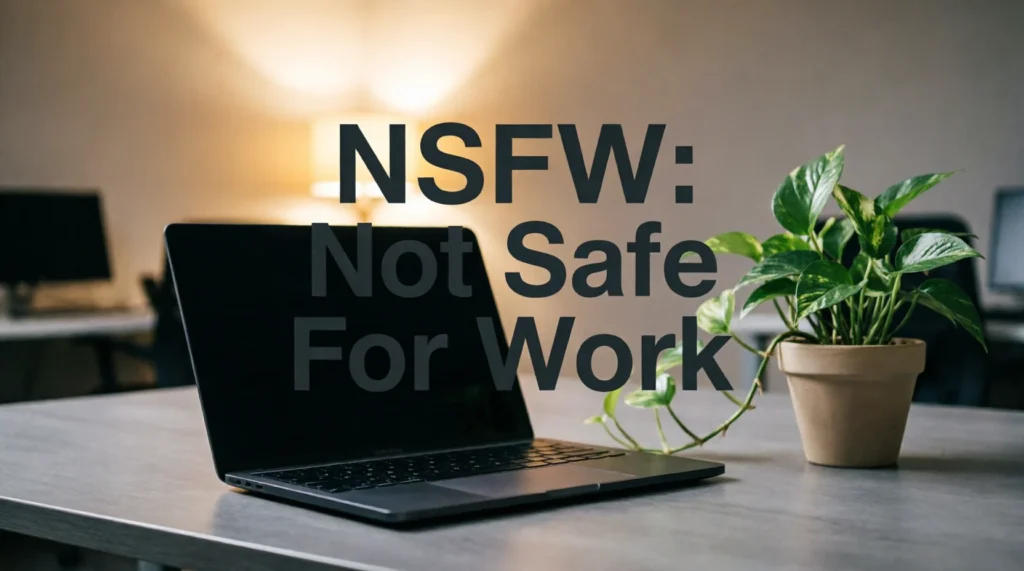
NSFW stands for “Not Safe For Work.”
It is a warning label used online to tell people that certain content may be inappropriate to view in professional, public, or family settings.
The content marked as NSFW often includes:
- Adult or explicit material
- Sexual content
- Graphic violence
- Strong language
- Disturbing images
- Other sensitive topics
In short, the label is meant to help you decide whether it’s a good idea to open something based on where you are and who might be around.
Simple Meaning of NSFW
Think of NSFW as a digital caution sign. ⚠️
It basically means:
“You may want to wait until you’re in a private place before viewing this.”
For example, if you’re sitting in an office meeting, studying in a library, or using your phone around children, clicking on NSFW content could lead to an uncomfortable moment.
The term isn’t necessarily saying the content is illegal or harmful. It’s simply warning that it may not be appropriate in certain environments.
Where Is NSFW Used?
You’ll find the NSFW label across many online platforms.
Social Media Platforms
People often tag posts as NSFW on:
- X (formerly Twitter)
- Tumblr
- Discord communities
- Various online forums
These warnings help users avoid accidentally viewing sensitive content.
Messaging Apps
Friends sometimes send messages like:
“This meme is NSFW 😂”
In this case, they’re warning you that the joke may contain adult humor or language.
Work Chats
Even in casual workplace conversations, employees may add an NSFW label before sharing something potentially inappropriate.
Websites and Forums
Some websites have entire sections dedicated to NSFW content, often requiring users to confirm their age before entering.
Why Do People Use NSFW?
The NSFW label serves several practical purposes.
1. Respecting Other People’s Environment
Not everyone is browsing the internet from the privacy of their home.
Someone might be:
- At work
- In class
- On public transportation
- Around family members
The warning allows people to make informed decisions.
2. Avoiding Embarrassing Situations
Imagine opening an explicit image during a presentation. Not ideal.
An NSFW tag helps reduce those accidental moments.
3. Promoting Responsible Sharing
Adding the label shows consideration for others.
It says:
“I think you should know what you’re about to see.”
Real-Life Examples of NSFW
Understanding the term becomes easier when you see it in context.
Example 1: Reddit Post
Title: “NSFW: Behind-the-scenes horror movie makeup photos”
Meaning: The images may be graphic or disturbing.
Example 2: Group Chat Message
Friend: “NSFW language in this video, but it’s hilarious.”
Meaning: The content contains strong language.
Example 3: Social Media Clip
Caption: “NSFW due to adult themes.”
Meaning: The content discusses mature topics.
Example 4: Meme Sharing
Coworker: “Don’t open this until lunch break. It’s NSFW.”
Meaning: The meme may include inappropriate jokes or imagery.
NSFW vs Similar Internet Terms
Several internet abbreviations are related to NSFW, but they don’t mean exactly the same thing.
| Term | Meaning | Typical Use |
|---|---|---|
| NSFW | Not Safe For Work | General warning about inappropriate content |
| SFW | Safe For Work | Suitable for professional environments |
| NSFL | Not Safe For Life | Extremely disturbing or graphic content |
| CW | Content Warning | Alerts users to potentially sensitive topics |
| TW | Trigger Warning | Warns about content that may trigger emotional distress |
Key Difference
- NSFW = Potentially inappropriate.
- NSFL = Extremely shocking or upsetting.
The distinction matters because NSFL content often involves severe graphic material that many people prefer to avoid entirely.
When Should You Use NSFW?
You don’t have to label everything online.
However, it’s a good idea to use NSFW when sharing content that includes:
Nudity
Explicit sexual references
Graphic violence
Strong profanity
Adult humor
Disturbing imagery
Adding a simple warning demonstrates courtesy and awareness.
Example
Instead of posting:
“Look at this!”
You could say:
“NSFW: Contains strong language and adult jokes.”
This gives others the choice to engage on their own terms.
Common Misunderstandings About NSFW
Many people misunderstand what the label actually means.
Myth 1: NSFW Always Means Pornography
Reality: Not necessarily.
While adult content is common, NSFW can also refer to graphic medical images, disturbing news footage, or extreme profanity.
Myth 2: NSFW Means Illegal
Reality: The label does not indicate legality.
It simply signals that the material may not be appropriate for all settings.
Myth 3: Everyone Has the Same Definition
Reality: Standards vary.
What one person considers harmless humor, another might view as inappropriate.
Context matters.
Myth 4: Only Adults Use the Term
Reality: Internet users of all ages encounter the abbreviation, especially on social platforms and online communities.
Pro Tips for Using NSFW Correctly 💡
If you’re active online, these tips can help.
Be Specific When Possible
Instead of writing only “NSFW,” add context.
Examples:
- NSFW – strong language
- NSFW – graphic injury photos
- NSFW – adult humor
This helps people decide whether they want to continue.
Respect Community Guidelines
Different platforms have different rules regarding explicit material.
Always review the policies before posting.
Consider Your Audience
A joke shared among close friends might not be appropriate in a professional group chat.
Use good judgment.
Don’t Ignore the Warning
If someone labels something NSFW, assume there’s a reason.
Opening it in a crowded workplace may not be the best idea. 😅
Why Understanding NSFW Matters Today
The internet blends personal, educational, and professional spaces more than ever before.
You might switch between:
- Work emails
- Social media feeds
- Family group chats
- Online communities
all within a few minutes.
Recognizing terms like NSFW helps you navigate digital spaces more confidently.
It’s not just internet slang.
It’s part of modern online etiquette.
FAQs
Is NSFW always sexual content?
No. While NSFW often involves adult material, it can also refer to graphic violence, disturbing images, or strong language.
What is the opposite of NSFW?
The opposite term is SFW, which stands for “Safe For Work.” It indicates content appropriate for professional settings.
Can memes be NSFW?
Yes. Some memes include explicit jokes, profanity, or suggestive images that may be considered inappropriate in public environments.
Should I label my posts as NSFW?
If your content contains mature themes, explicit language, nudity, or graphic material, adding an NSFW warning is generally considered good online etiquette.
Final Thoughts
So, what does NSFW stand for?
It means Not Safe For Work and it’s used as a warning that content may be inappropriate to view in public or professional environments.
Understanding this simple abbreviation can help you avoid awkward situations respect others’ boundaries, and communicate more responsibly online.
The next time you see an NSFW label, you’ll know exactly what it means and whether now is the right time to click.

Mira has worked for 5 years as a freelance and online content writer, producing high-quality articles for blogs, websites, and digital platforms. She focuses on delivering original, reader-friendly, and informative content.