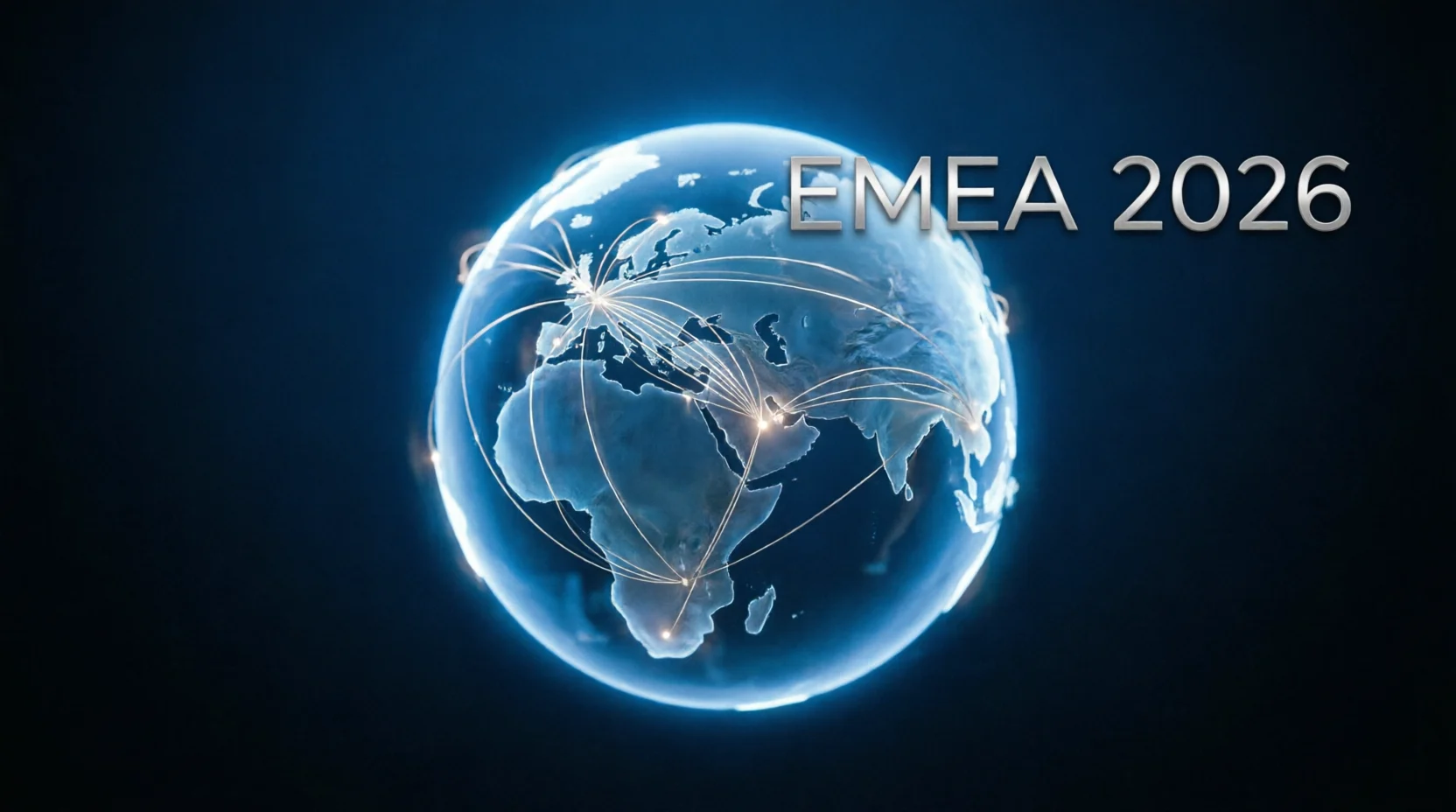
Have you ever come across the term EMEA in a job description business email LinkedIn post or company announcement and wondered What does EMEA mean
You’re not alone.
Many people assume it’s a complicated corporate acronym. In reality the EMEA meaning is quite simple, and once you understand it you’ll start noticing it everywhere in the business world.
Whether you’re applying for international jobs working with global teams, or simply curious about internet and corporate terminology this guide will help you understand exactly what EMEA means where it’s used and why companies rely on it so heavily.
Let’s break it down in plain English.
What Does EMEA Mean?
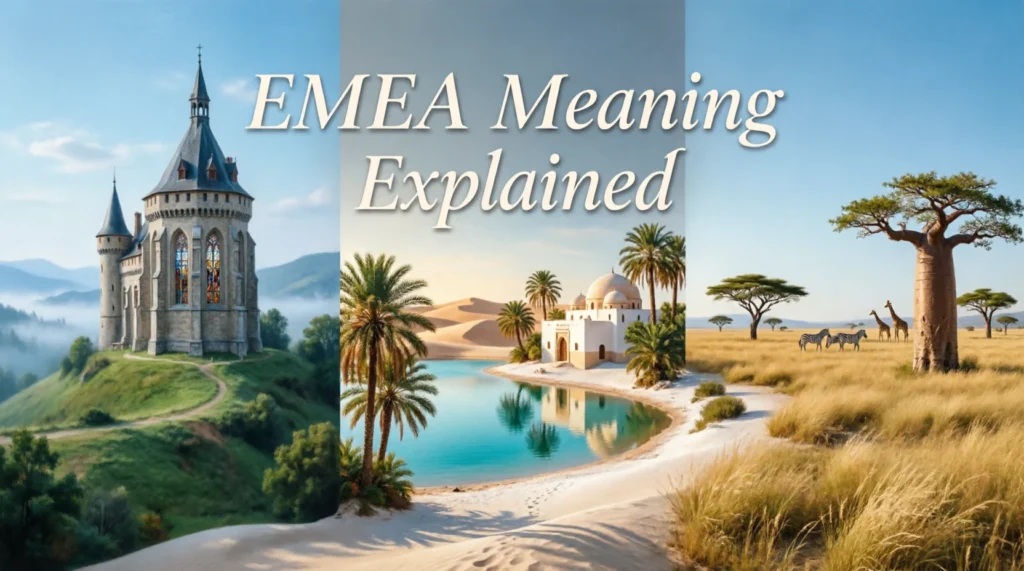
EMEA stands for Europe, the Middle East, and Africa.
It is a geographical grouping used by businesses, organizations, and multinational companies to divide their operations into regions.
Featured Snippet Definition
EMEA means Europe, the Middle East, and Africa. It is a business term used to describe a large geographic region that combines countries from these three areas for management, marketing, sales, and operational purposes.
In simple words, instead of listing dozens of countries individually, companies say “EMEA” to refer to all of them together.
Simple Meaning of EMEA
Think of EMEA as a business shortcut. ✅
Instead of saying:
“Our team handles operations across Europe, the Middle East, and Africa.”
A company might simply say:
“Our EMEA team manages regional operations.”
It’s shorter, more efficient, and widely understood in international business environments.
EMEA =
- E = Europe
- M = Middle East
- EA = Africa
Even though the acronym looks unusual at first, it has become a standard term in global business communication.
Where Is EMEA Used?
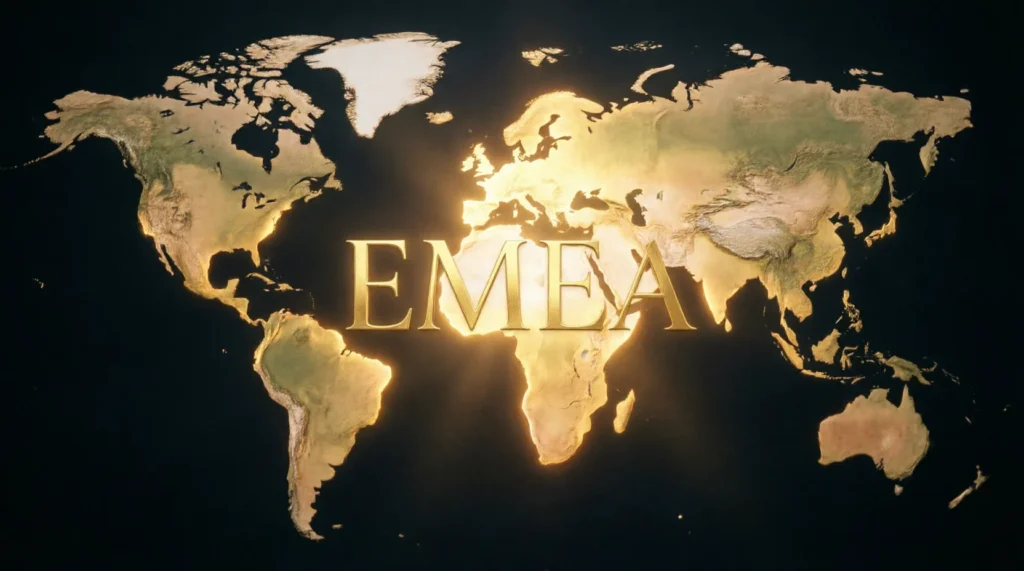
You will mostly encounter EMEA in professional settings.
1. Job Titles
Many companies use EMEA in employee roles, such as:
- EMEA Sales Manager
- EMEA Marketing Director
- EMEA Operations Specialist
- EMEA Customer Success Lead
This means the person oversees activities within the EMEA region.
2. Corporate Communications
Companies often announce:
“The product will launch in EMEA next quarter.”
This indicates that the release applies to countries within Europe, the Middle East, and Africa.
3. Customer Support Teams
Global businesses frequently organize support by region.
Examples include:
- Americas Support Team
- APAC Support Team
- EMEA Support Team
4. Market Research
Researchers use EMEA to analyze trends across large geographic markets.
For example:
“EMEA smartphone sales increased this year.”
Why Do People Use EMEA?
You might wonder why companies don’t just list countries individually.
The answer is efficiency and organization. 🔥
EMEA helps businesses:
- Simplify communication
- Structure global teams
- Manage regional strategies
- Analyze market performance
- Coordinate time zones more effectively
Imagine a company operating in 70 countries. Grouping those countries into regions makes management much easier.
Real-Life Examples of EMEA Meaning
Let’s make it practical.
Example 1: Job Posting
“We’re hiring an EMEA Sales Representative.”
Meaning: You’ll likely work with customers or partners across Europe, the Middle East, and Africa.
Example 2: Business Email
“Please share the updated report with the EMEA leadership team.”
Meaning: The report should go to executives responsible for that geographic region.
Example 3: Product Launch
“The new software update will be available first in EMEA.”
Meaning: Customers in those regions will receive access before others.
EMEA vs Similar Terms
Businesses often divide the world into several regions. Here’s how EMEA compares.
| Term | Meaning | Regions Included |
|---|---|---|
| EMEA | Europe, Middle East, and Africa | Europe + Middle East + Africa |
| APAC | Asia-Pacific | Asia and Pacific countries |
| LATAM | Latin America | Central and South America |
| NA | North America | United States, Canada, Mexico |
| AMER | Americas | North and South America |
Understanding these terms can make international business communication much easier.
Which Countries Are Included in EMEA?
There isn’t always a universal list.
Different companies may define EMEA slightly differently based on their operations.
However, EMEA commonly includes countries from:
Europe
- Germany
- France
- Italy
- Spain
- United Kingdom
- Netherlands
Middle East
- Saudi Arabia
- United Arab Emirates
- Qatar
- Israel
- Kuwait
Africa
- South Africa
- Nigeria
- Kenya
- Egypt
- Morocco
⚠️ Important: Some organizations classify certain countries differently depending on business needs.
When Should You Use the Term EMEA?
You should use EMEA when discussing regional business activities involving those areas collectively.
Appropriate situations include:
International business discussions
Corporate reports
Professional presentations
Global marketing strategies
Job descriptions
Less appropriate situations:
Casual conversations
School geography assignments
Travel discussions involving only one country
If your audience isn’t familiar with business terminology, it may help to explain the acronym the first time you use it.
Common Misunderstandings About EMEA
Because EMEA is so common in professional settings, people sometimes make incorrect assumptions.
Misunderstanding #1: EMEA Is a Country
No.
EMEA is not a country. It’s a regional grouping.
Misunderstanding #2: EMEA Has Official Borders
Not exactly.
Different organizations define EMEA according to their own operational structures.
Misunderstanding #3: Everyone Knows What EMEA Means
Surprisingly, many people outside international business have never heard the term.
If you’re communicating with a general audience, consider spelling it out.
Why Understanding EMEA Can Benefit Your Career
Knowing business acronyms can improve professional confidence.
If you’re applying for international positions, understanding terms like EMEA demonstrates familiarity with global business environments.
Benefits include:
- Better understanding of job descriptions
- Improved communication during interviews
- Greater awareness of international organizational structures
- Stronger professional vocabulary
It may seem like a small detail, but these details matter.
Pro Tips for Using EMEA Correctly 💡
1. Define It First
If you’re writing for a broad audience, introduce it this way:
Europe, the Middle East, and Africa (EMEA)
Then continue using EMEA afterward.
2. Know Your Company’s Definition
Regional boundaries sometimes vary.
Always check internal guidelines when accuracy matters.
3. Use It Professionally
EMEA belongs primarily in business contexts.
Avoid forcing it into situations where simpler wording works better.
4. Learn Related Terms
Understanding APAC, LATAM, and AMER can help you navigate global discussions more confidently.
The Growing Importance of EMEA in Business
Globalization has made regional coordination increasingly important.
Companies now operate across multiple continents, serving customers with different languages, cultures, regulations, and time zones.
EMEA provides a practical framework for managing that complexity.
From technology companies and financial institutions to healthcare organizations and consulting firms, EMEA has become part of everyday business language.
If you work in an international environment, chances are you’ll encounter this acronym regularly.
FAQs:
What is the full form of EMEA?
EMEA stands for Europe, the Middle East, and Africa.
It is commonly used by multinational companies to organize regional operations.
Is EMEA a continent?
No.
EMEA is not a continent or political organization. It is a business classification that groups several geographic areas together.
What is an EMEA role?
An EMEA role refers to a position responsible for activities within the Europe, Middle East, and Africa region.
Examples include sales, marketing, operations, and customer support roles.
Is EMEA the same as Europe?
No.
Europe is only one part of EMEA.
The EMEA region also includes countries in the Middle East and Africa.
Why do companies use EMEA?
Companies use EMEA to simplify management, improve communication, organize teams, and coordinate strategies across multiple countries.
Final Thoughts
At first glance EMEA may seem like another confusing corporate buzzword.
But its meaning is actually straightforward.
EMEA stands for Europe the Middle East, and Africa and businesses use it to describe operations across these combined regions.
Understanding the EMEA meaning can help you interpret job listings follow workplace conversations, and communicate more effectively in international settings.
The next time you see EMEA in an email or meeting invitation, you’ll know exactly what it means.

Mira has worked for 5 years as a freelance and online content writer, producing high-quality articles for blogs, websites, and digital platforms. She focuses on delivering original, reader-friendly, and informative content.