
Have you ever been scrolling through TikTok watching a Twitch stream or reading comments online when someone suddenly says That’s the Fanum Tax
If you felt confused you’re not alone.
Internet slang evolves incredibly fast and new phrases seem to appear overnight. One moment nobody has heard of them, and the next they’re everywhere. Fanum tax is one of those viral expressions that exploded across social media and became part of everyday online conversations.
So, what exactly does it mean? Is it a real tax? Why do people keep joking about it? And when should you use it yourself?
Let’s break it down in simple terms.
What Does Fanum Tax Mean?

Fanum tax means taking a portion of someone else’s food, snacks, or items as a joke, usually without formal permission.
The phrase originated from online creator Fanum, who became known for playfully grabbing food from his friends during videos and streams. Viewers began calling this habit the “Fanum Tax.”
Featured Snippet Definition:
Fanum tax is an internet slang term used humorously to describe taking a small portion of someone else’s food or belongings as an unofficial “fee.” The phrase became popular through streamer Fanum and later spread across TikTok and other social media platforms.
Simple Meaning of Fanum Tax
In everyday language, Fanum tax basically means “sharing whether you like it or not.” 😂
Imagine this situation:
Your friend walks into the room with a large pizza.
You immediately grab a slice and say:
“Sorry, that’s the Fanum Tax.”
You’re jokingly suggesting that your friendship gives you the right to claim a small percentage of whatever they have.
Of course, it’s meant to be playful rather than serious.
Where Is Fanum Tax Used?
The term became popular online before spreading into real-life conversations.
TikTok
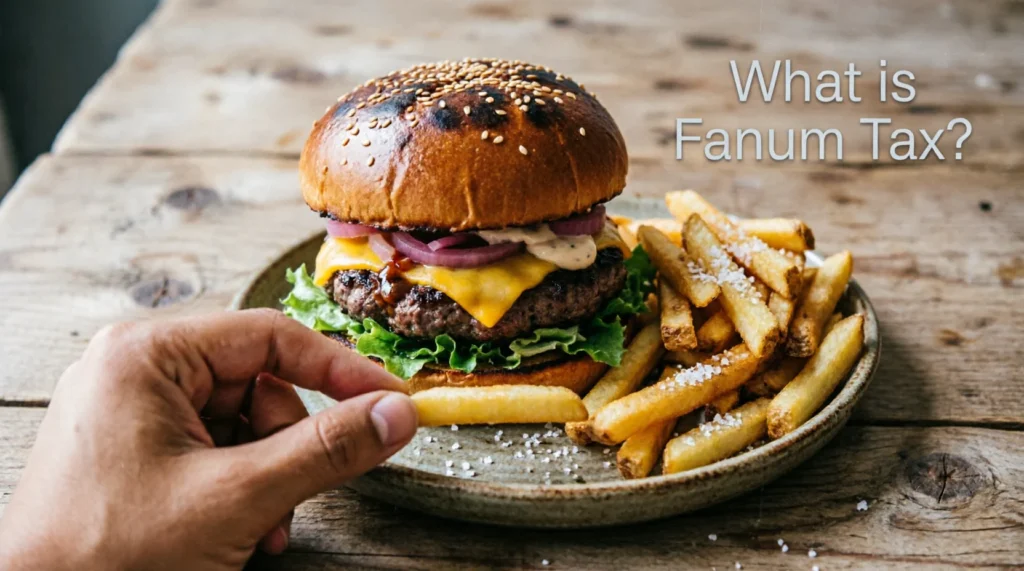
TikTok users often create funny videos showing siblings, friends, or partners stealing fries, chips, or desserts while calling it the Fanum Tax.
Twitch
The phrase gained traction among viewers who watched gaming streams and creator content.
YouTube
Reaction videos, compilation clips, and meme channels helped introduce the term to even larger audiences.
Instagram Reels
Short-form comedy creators frequently use the expression in relatable skits.
Everyday Conversations
Many teenagers and young adults now use the phrase offline when joking with friends about food sharing.
Why Do People Use Fanum Tax?
The popularity of this slang phrase isn’t random.
People use it because it is:
- Funny 😂
- Relatable 🍕
- Easy to understand ✅
- Connected to internet culture 🌐
- A way to bond with friends 🤝
Food stealing among close friends and family has always existed.
The internet simply gave it a memorable name.
Using the phrase also signals that you’re familiar with modern memes and online trends.
Real-Life Examples of Fanum Tax
Understanding slang becomes easier when you see it in context.
Example 1: The French Fries Situation
Your friend buys fries during lunch.
You take a few and say:
“Don’t worry. Just collecting the Fanum Tax.”
Meaning: You’re joking about taking some of their food.
Example 2: Sharing Candy
Your sibling opens a bag of candy.
You grab one piece.
“Sibling privileges. Fanum Tax.”
Meaning: You’re playfully claiming a right to share.
Example 3: TikTok Caption
A creator posts a video taking chicken nuggets from their partner.
Caption:
“Fanum Tax has been collected.”
Meaning: They humorously describe taking food from someone close to them.
Example 4: Pizza Night
Someone arrives with an extra-large pizza.
Before they sit down, another person takes a slice.
“Government regulations. Fanum Tax.”
Meaning: They’re exaggerating the joke by treating it like an official rule.
Fanum Tax vs Similar Internet Terms
Understanding related slang helps avoid confusion.
| Term | Meaning | Tone |
|---|---|---|
| Fanum Tax | Taking a small portion of someone’s food as a joke | Playful |
| Sharing Is Caring | Encouraging generosity | Positive |
| Food Tax | General phrase for stealing bites of food | Casual |
| Called Dibs | Claiming something before others | Assertive |
| Finders Keepers | Keeping what you found | Childish/Humorous |
Although these expressions overlap, Fanum Tax specifically refers to the meme-based version connected to online culture.
When Should You Use Fanum Tax?
Like many slang terms, context matters.
Good Times to Use It ✅
- Around close friends
- With siblings who understand internet jokes
- In humorous social media posts
- During casual conversations
- When everyone involved finds it funny
Times to Avoid It ⚠️
- Professional settings
- Formal communication
- With people unfamiliar with internet slang
- When someone genuinely doesn’t want to share food
- Situations where the joke may seem disrespectful
Remember: the humor depends on mutual understanding.
Common Misunderstandings About Fanum Tax
Because the term became so widespread, several misconceptions appeared.
“Is Fanum Tax a Real Tax?”
No.
There is no official government tax called Fanum Tax.
The phrase is entirely humorous.
“Does It Only Apply to Food?”
Mostly, yes.
However, people sometimes use it jokingly for other small items, such as candy, snacks, or even borrowing everyday objects.
“Is It Meant to Be Rude?”
Not usually.
The intention is generally playful.
That said, constantly taking other people’s things without permission can stop being funny very quickly.
“Do Adults Use It?”
Yes.
Although the phrase is especially popular among younger audiences, anyone familiar with internet culture may use it casually.
Why Fanum Tax Became So Viral
Internet trends succeed when they combine three ingredients:
1. Relatability
Almost everyone has experienced someone taking food from their plate.
2. Humor
Calling it a “tax” makes an ordinary situation feel dramatic and ridiculous.
3. Repeatability
The phrase works in countless situations, making it ideal for memes and short videos.
Because of this, Fanum Tax quickly moved beyond its original audience.
Pro Tips for Using Fanum Tax Correctly 🔥
Want to sound natural when using the phrase?
Keep these tips in mind.
Use it playfully.
The joke works best when everyone involved is laughing.
Know your audience.
Not everyone follows internet trends.
Don’t overuse it.
Repeating any slang phrase too often can become annoying.
Respect boundaries.
Even funny memes shouldn’t justify taking things people clearly don’t want to share.
Use it in casual environments.
Friends, family gatherings, and social media are usually the safest places.
The Psychology Behind the Joke
Interestingly, the success of Fanum Tax reflects something deeper about human relationships.
Sharing food has long been associated with:
- Trust
- Friendship
- Family bonds
- Social connection
The phrase transforms a common social experience into a shared cultural joke.
People recognize themselves in the situation, which makes the humor more powerful.
It’s not really about stealing fries.
It’s about the familiar dynamics between people who feel comfortable enough to tease one another.
FAQs:
What is the Fanum Tax meaning?
Fanum Tax is an internet slang term describing the humorous act of taking some of another person’s food or snacks as an unofficial “fee.”
Where did Fanum Tax originate?
The phrase originated from content involving creator Fanum, whose habit of playfully taking food from friends became a running joke among viewers.
Is Fanum Tax a real tax?
No. It is purely an internet meme and has no connection to government taxes or official regulations.
Can Fanum Tax refer to things other than food?
Usually, it refers to food. However, some people jokingly apply it to small items they borrow or claim from friends.
Is it okay to use Fanum Tax in everyday conversations?
Yes, as long as the setting is casual and the people around you understand the joke and are comfortable with it.
Final Thoughts
Internet slang changes constantly but only a few expressions become part of mainstream culture.
Fanum Tax succeeded because it turned an everyday experience into something memorable and funny.
At its core, the phrase simply refers to playfully taking a small portion of someone else’s food or belongings as an unofficial tax.
If you understand the joke you’ll probably start noticing it everywhere from TikTok videos to conversations among friends.
Just remember one important rule:
A Fanum Tax is only funny when everyone involved is enjoying the joke.

Mira has worked for 5 years as a freelance and online content writer, producing high-quality articles for blogs, websites, and digital platforms. She focuses on delivering original, reader-friendly, and informative content.